This guide is help with reading a label, not medical or safety advice. For decisions about a specific child, product or condition, the organisations cited below publish proper guidance and your clinician knows your case.
The line everyone sees and nobody reads
Look at the back of almost any pen, paint or marker sold in the United States and you will find a short sentence: conforms to ASTM D 4236. It is on our boxes too. Most people read it as a stamp of approval and move on, which is a shame, because what it actually certifies is both narrower and more useful than that.
Under the federal Labeling of Hazardous Art Materials Act, in force since 18 November 1990, every manufacturer, distributor and seller of art materials in the US carries a legal duty: the material has to be evaluated by a qualified toxicologist and, where necessary, labelled for chronic toxicity to the ASTM D 4236 standard. The Consumer Product Safety Commission requires the conformance statement on the product, requires a manufacturer's phone number on anything carrying a chronic hazard warning, and requires a product with chronic hazard potential to state on its label that it is not appropriate for children.
So the sentence means a toxicologist looked at the formula and the labelling follows from what they found. Source: Art & Creative Materials Institute, Governing Regulations, read 2026-08-07.
What it does not mean
It does not mean "non-toxic". A product that needed a warning and carries one also conforms to the standard. Conformance tells you the evaluation happened and that any required warning is printed; the warning itself, or its absence, is the part that tells you about the contents. That distinction is worth knowing before you read another marketing line about safety, ours included.
The practical reading order on any art material box is therefore: find the conformance statement, then look for a warning. No warning next to a conformance statement is the good outcome. A warning is not a scandal either: it is the label doing precisely the job the law designed it to do.
What paediatricians say about markers for children
Here is guidance that does not flatter a catalogue of alcohol markers, and we would rather print it than pretend it does not exist. The American Academy of Pediatrics, on choosing art supplies for children, is direct: water-based, unscented markers are a better choice for children than permanent markers. It also advises looking for the ASTM D 4236 conformance statement and the Art & Creative Materials Institute's Approved Product seal, working with proper ventilation, supervising children while they use art materials, and keeping away anything labelled "Not for Use by Children". Source: American Academy of Pediatrics, Choosing Safe Art & Craft Supplies for Children (HealthyChildren.org), read 2026-08-07.
Read against our own shelves, that lands somewhere specific:
| Product | Who it suits | Why |
|---|---|---|
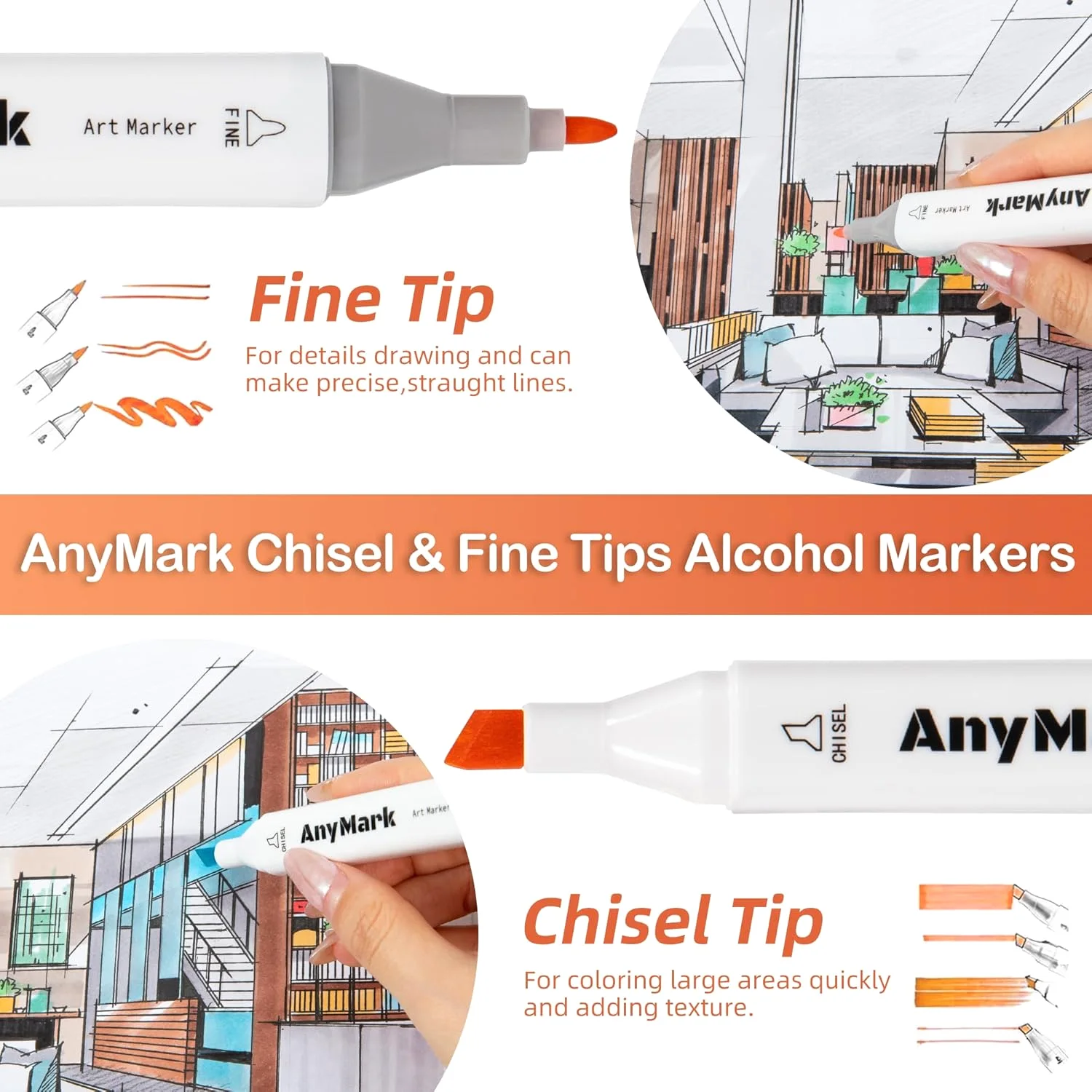
| Alcohol markers | Older students, hobbyists, adults | Solvent-based and permanent; use in a ventilated room |
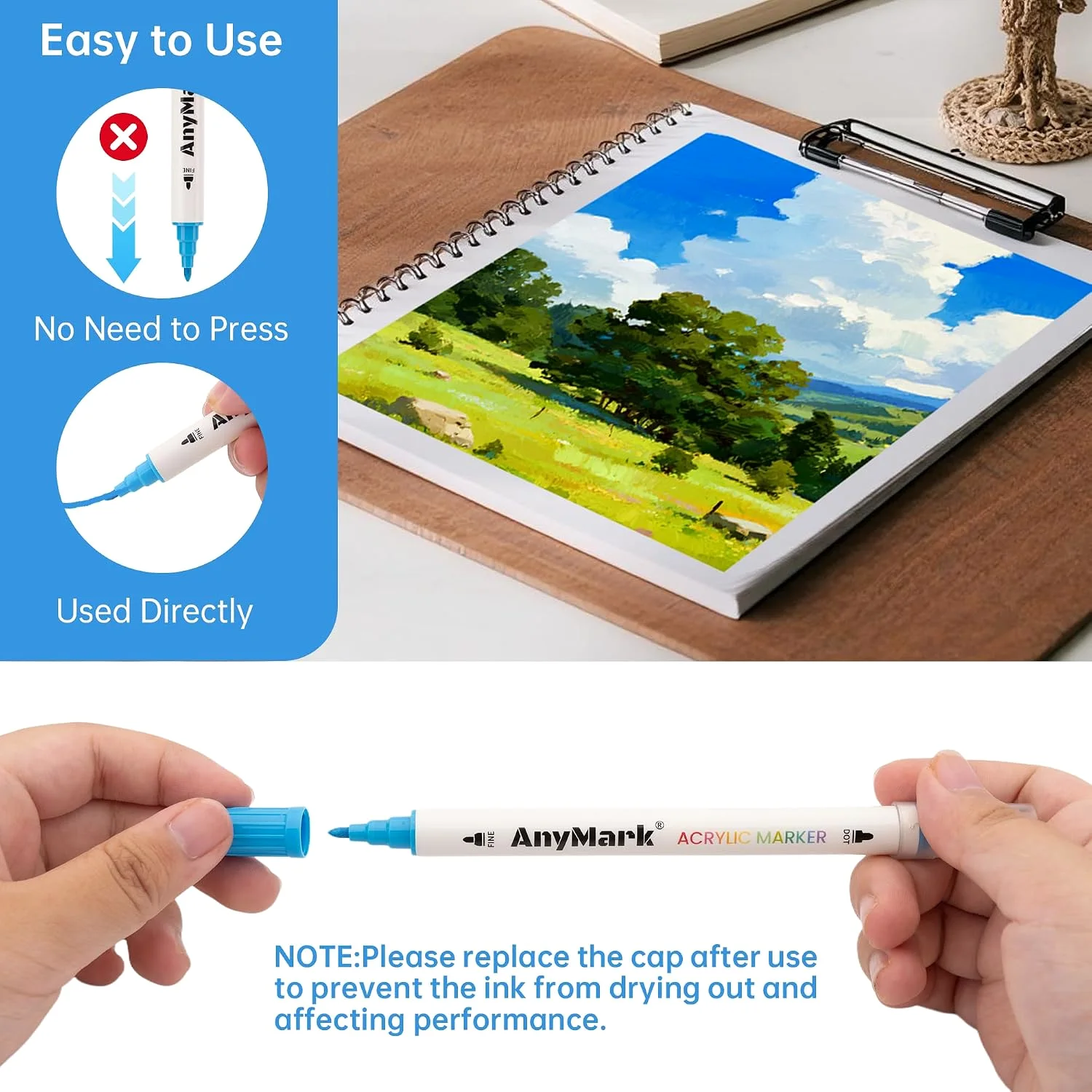
| Acrylic paint pens | Craft work at any age, with supervision | Water-based acrylic, but permanent once dry on most surfaces |
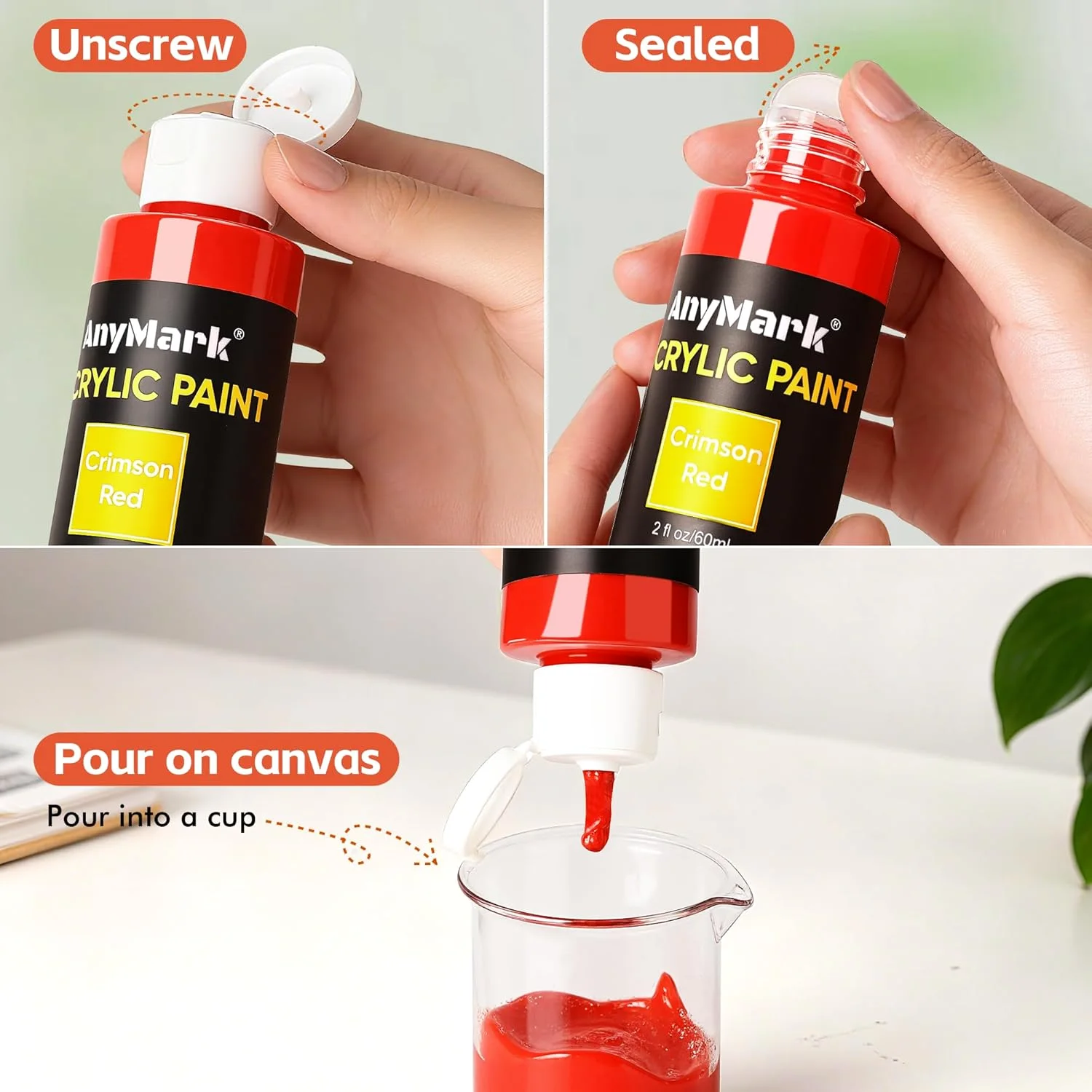
| Acrylic paint sets | Painting at the table, supervised | Washes off skin wet; permanent on fabric |
| Chalk markers | Boards and glass, supervised | Wipes off non-porous surfaces |
None of that makes an alcohol marker dangerous in a teenager's hands. It does mean that if you are buying for a young child, the AAP would point you at a water-based marker first, and we are not going to talk you out of guidance we cite on our own site.
Ventilation, in plain terms
Alcohol markers smell because the solvent evaporates, and that is the same evaporation that gives you the blending window. In a normal room with a door or window open, that is unremarkable. In a small closed room over a long session it is worth opening something. This is ordinary practice for solvent-based materials rather than a special warning about ours.
What we check on our own labels
Everything we publish about a set comes from that set's own specification. If a box states the ASTM D 4236 conformance line, its page here says so; if it does not, the page stays quiet rather than borrowing the claim from a sibling product. Ratings appear only where we counted them, prices come from our own scheduled update, and the whole method is written out on how we keep this site honest.
Once the label makes sense, the rest is craft: how the ink blends and what the paint pens will hold onto. The whole AnyMark marker range sits behind those two guides.
Sources opened and read on 2026-08-07: Art & Creative Materials Institute, Governing Regulations; American Academy of Pediatrics, Choosing Safe Art & Craft Supplies for Children (HealthyChildren.org).