Opaque is the whole point
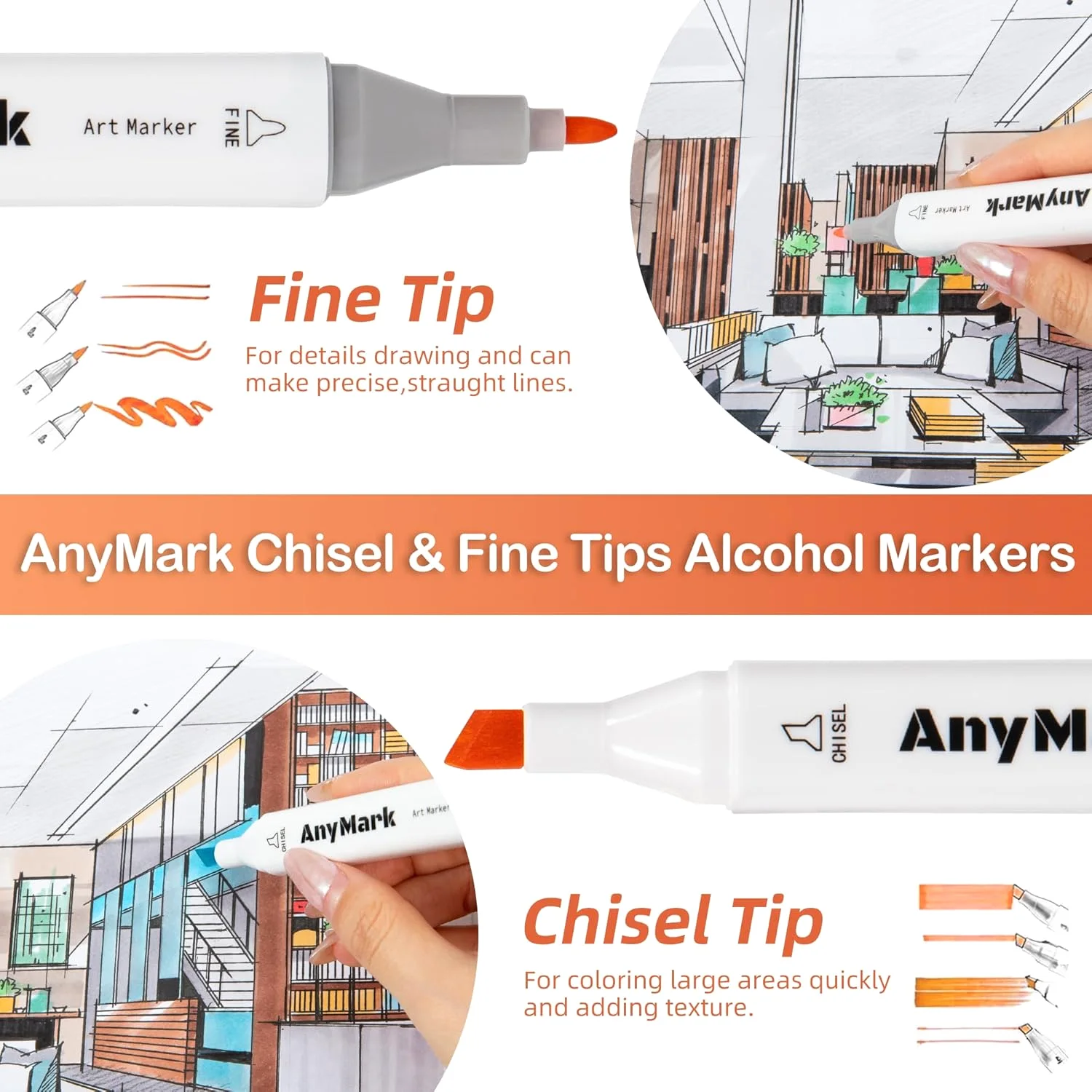
An ink marker is a dye: it stains what it touches, so on a black mug it disappears and on a river stone it barely registers. An acrylic paint pen is paint in a barrel. It is a pigment suspension that sits on top of a surface and dries to a solid film, so a white line stays white on black card and a yellow one stays yellow on grey slate.
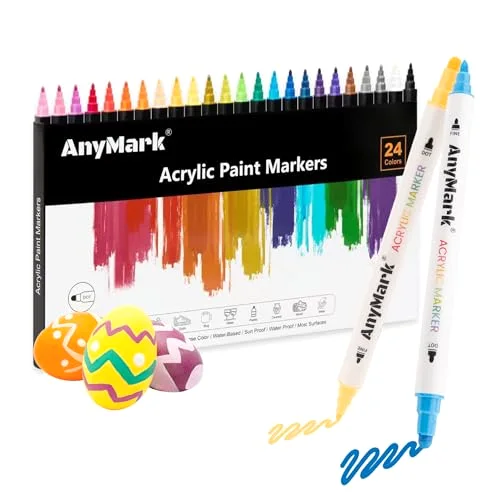
That single property is why the paint pens shelf exists alongside the markers. The AnyMark acrylic paint pens come in two tip pairings, dot and fine for stippling and detail, brush and fine for lettering and fills, in sets from 24 to 120 colours.

Surface by surface
| Surface | Preparation | Notes |
|---|---|---|
| Rock and stone | Wash, dry fully | Porous stone drinks the first coat; expect two passes for full opacity |
| Glass and glazed ceramic | Wipe with alcohol to remove oils | Non-porous, so the line sits proud and needs sealing to survive handling |
| Raw wood | Sand smooth, dust off | Takes paint beautifully; grain will pull a fine line slightly |
| Fabric and canvas shoes | Wash, dry, put card inside | Card stops the paint reaching the other side; heat-set if the maker's care sheet allows |
| Dark card and black paper | None | The surface these pens were made for; one coat usually covers |
| Plastic and phone cases | Alcohol wipe | Adhesion depends on the plastic; test on a hidden corner first |
| Metal | Degrease | Needs a sealant for anything that gets handled |
Starting a pen without flooding it
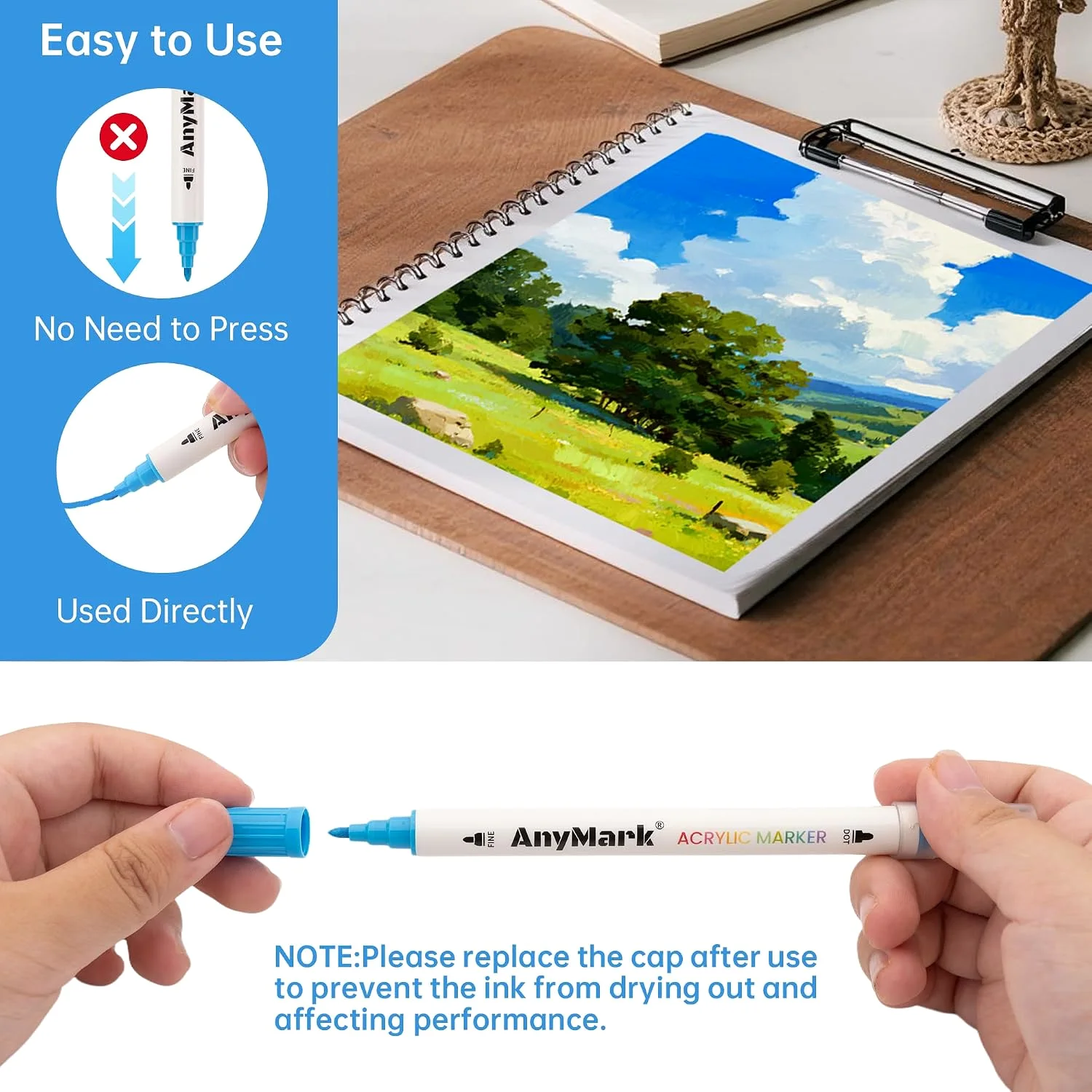
A paint pen is a valve, and the first thirty seconds decide how the whole session goes. Shake it capped, with the mixing ball audible. Press the nib down on scrap paper in short pumps and wait, because the paint has to travel the length of the barrel. When colour appears, stop pumping. The commonest first mistake is pressing until paint arrives all at once and then flooding the first stroke.
Between colours, cap the pen. Between sessions, cap it hard and store it horizontally so the pigment does not settle into one end.
Layering, drying and the mistake worth avoiding
Acrylic dries touch-dry in minutes and cures over hours. Those are different things. A design that feels dry after ten minutes will still lift if you scrub it, so give a finished piece a few hours before it gets handled or sealed.
Work light colours over dark rather than the reverse, the same rule as the alcohol marker guide, but for the opposite reason: here the top layer covers rather than blends, so an opaque light colour is what does the covering.
- Two thin coats beat one thick one. A thick coat skins over and stays soft underneath.
- Let a colour set before crossing it. Crossing wet acrylic drags the layer below into a smear.
- Do not seal too early. Sealant over uncured paint traps solvent and clouds.
When to seal, and when not to bother
Sealing is about handling, not about the paint. A stone on a shelf and a page in a sketchbook need nothing. A mug, a keyring, a pair of shoes or a planter that lives outdoors all get touched, washed or rained on, and those want a clear acrylic sealer once the paint has cured.
One honest limit: hand-painted decoration on anything that goes in a dishwasher is decorative, not durable. Paint on the outside of a mug, keep it away from the rim, and wash it by hand.
Which set size to start with
The 24 colour sets are enough for rock painting and card work. The 48 covers most craft projects without mixing. The 80 and 120 sets are for people who want the in-between shades on hand rather than layering to reach them. If the work is going to be painted rather than drawn, the acrylic paint sets come with their own brushes and cover ground a pen never will.
And whichever you buy, the label on the box tells you more than the marketing does, and how to read it is its own guide, and it applies to every product in the AnyMark catalogue.
Sources opened and read on 2026-08-07: Art & Creative Materials Institute, Governing Regulations; American Academy of Pediatrics, Choosing Safe Art & Craft Supplies for Children (HealthyChildren.org).